What we treat / Termites
Wings on the windowsill.
Orange County has both kinds. Drywood termites live inside the wood itself and leave tiny pellets. Subterranean termites live in the soil and build mud tubes up the foundation. They need different treatments, and most homes do not need a tent to fix either one.
Inspection free for homeownersEscrow report $125. Treatment quoted after inspection.
Same-day service when you call before noon.
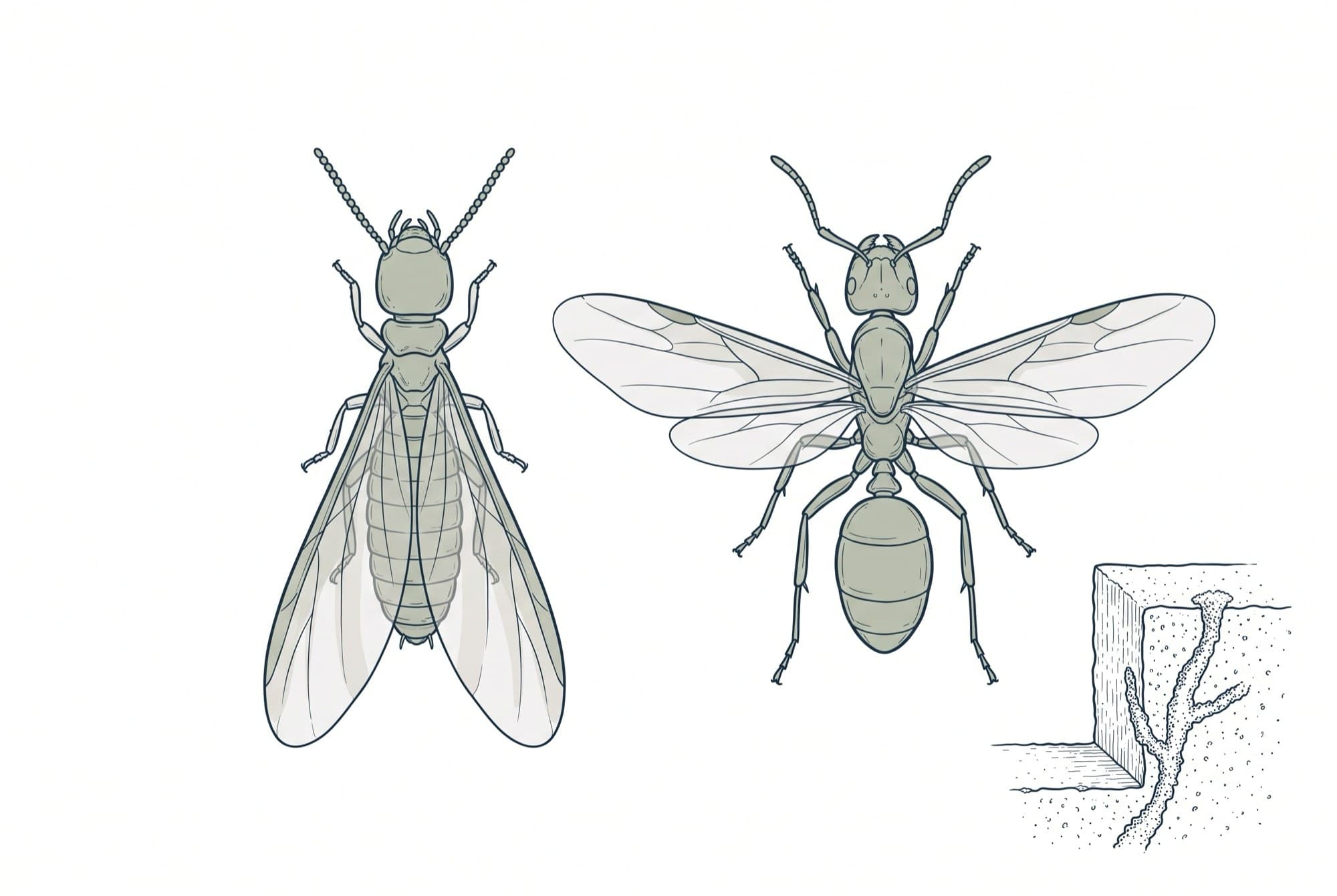
How to tell
- Piles of shed wings on a sill or in a spider web after a warm afternoon. That was a swarm.
- Small, hard, six-sided pellets collecting under a window frame, door jamb, or in the garage. That is drywood frass.
- Pencil-width mud tubes on the stem wall, in the garage, or in the crawlspace. That is subterranean.
What we do about it
Step 1: Inspect
A full structure inspection, attic and crawlspace included. Free for homeowners. We probe accessible wood and tap for hollow spots.
Step 2: Report
A written report in the format the Structural Pest Control Board requires, with a diagram of what we found and where. You keep it.
Step 3: Treat
Drywood: foam or dust into the galleries, locally. Subterranean: a trench-and-treat around the foundation. We refer fumigation only when the infestation is genuinely widespread, and we say so in writing.
Step 4: Warranty
One year on treated areas, with a re-inspection at the end of it.
“The inspector actually crawled the crawlspace. Told us we did not need to tent, treated the two spots, and gave us a written report we could keep for the sale.”
When they show up here
Subterranean swarms follow spring rain. Drywood swarms come with the late-summer heat.